Building an Eye Cream Ingredient Pairing Roadmap
Eye cream development benefits from a sourcing brief that connects an ingredient's identity with its role, handling and finished-product expectations. A botanical name alone says little about batch consistency, odour, colour, carrier or compatibility with the rest of the formula.
Key takeaways
- Define the raw material by identity and source, not just a familiar name.
- Track batch variation and carrier details before formula approval.
- Treat source substitutions as controlled development changes.
- Use finished-product evidence for claims and launch decisions.
What should a botanical sourcing brief identify?
Record the accepted INCI or supplier identity, extraction or processing description supplied by the vendor, carrier, origin documentation and storage needs. Ask for batch-level paperwork and a specification that can be matched to the received lot.
Avoid treating 'natural' as a complete quality standard. The brand should define what provenance or processing information matters for its market and how a substitute will be reviewed if the original source becomes unavailable.
How does sourcing affect an eye cream concept?
Yunmei's eye cream guide discusses retinol, peptides, niacinamide and hyaluronic acid, while buyers may also consider botanical extracts for a product story. Each candidate needs a clear role and a reason to remain in the formula after sensory and compatibility review.
A natural skincare ingredients brief should name the finished-product need before requesting a list of fashionable raw materials. Ingredient sourcing is one of the schedule factors identified by Yunmei, so late substitutions can affect both evidence and launch timing.
Which documents help compare suppliers?
Compare identity and specification documents, batch certificates where available, storage and handling instructions, and the supplier's change-notification process. Check that the document refers to the exact material and lot rather than a generic marketing description.
Ask how the material is protected in transit and how re-test or expiry dates are managed. A material can be well documented at purchase and poorly controlled after opening if the handling instructions are not followed.
| Active | Possible brief role | Review focus |
|---|---|---|
| Retinol | Visible-ageing concept | Tolerance and stability |
| Peptides | Targeted performance story | Finished-formula evidence |
| Niacinamide | Skin-appearance support | Level and user experience |
| Hyaluronic acid | Hydration positioning | Texture and pilling |
How can variation be evaluated in the formula?
Observe incoming colour and odour against an agreed range, then ask the formulator whether normal variation can shift the finished cream. The answer may depend on concentration, opacity, fragrance and the package through which the customer sees the product.
Do not force a raw material to meet an impossible visual standard without discussing what it changes elsewhere. If adjustment is needed, document which test confirms the finished formula remains acceptable.
When should an ingredient substitution trigger review?
Trigger review when source, processing, carrier, grade or specification changes in a way that can alter identity or performance. Procurement should notify technical and quality teams before the replacement enters production, not after the original stock runs out.
Link the substitute to a new formula revision when appropriate. That record tells the brand which sample and evidence package apply and prevents two different raw-material sources from sharing one unqualified approval.
What testing belongs in the launch calendar?
Yunmei publishes three to six months for stability and compatibility reports. Place the selected material and commercial pack in the test plan early. The project team should distinguish the sample review date from the date required reports are available.
If a sensitive-skin claim is considered, the customer guidance calls for patch-test results. Do not infer a claim from ingredient origin or a supplier document; review the finished product and relevant evidence.
How can procurement protect continuity?
Maintain an approved source record, forecast usage and set a notification threshold before inventory becomes urgent. Where a second source is necessary, qualify it deliberately with comparison samples and defined acceptance criteria.
Continuity planning reduces the chance that a rushed replacement changes colour or sensory feel just before launch. It also gives the manufacturer time to explain options while there is still a choice.
How much material does a pilot actually need?
If a formula uses 0.2% of a 100 kg batch, the required ingredient mass is 100 kg × 0.002 = 0.2 kg, or 200 g. If the supplier's smallest pack is 1 kg, the remaining 800 g needs a labelled storage plan and a realistic use-by review; it is not automatically usable forever.
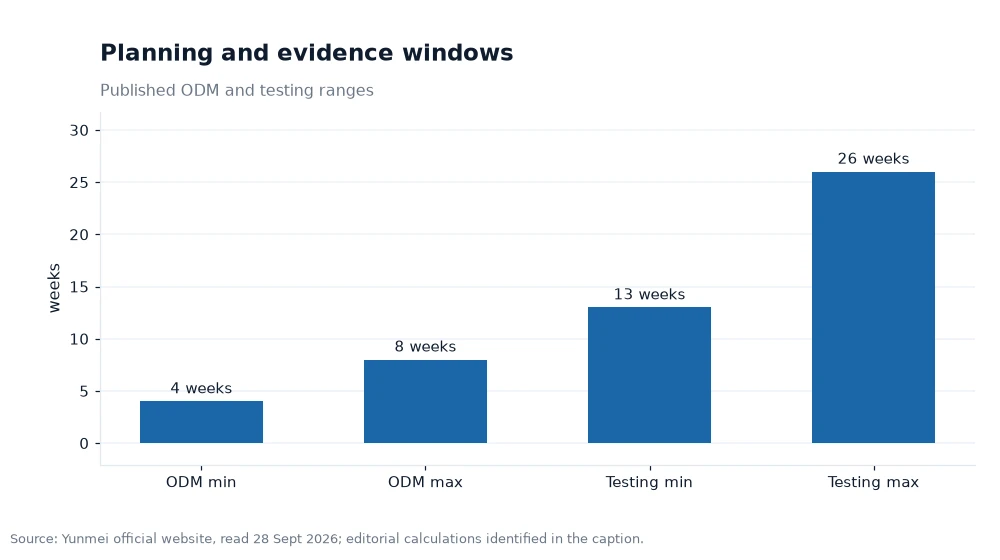
Project preparation and evidence completion can overlap, but they are not interchangeable milestones. Confirm which sample and package each report covers.
Frequently asked questions
Does botanical origin guarantee a consistent eye cream?
No. Consistency depends on material identity, specification, batch variation, handling and the finished formula. Review documents and test the actual product.
What should happen when a raw-material source changes?
Notify technical and quality reviewers, assess the specification difference and decide which formula, sensory or compatibility checks must repeat before use.
Can an ingredient supplier's claim be copied to the product label?
Not without review. Product wording should reflect the finished formula, the target market and evidence that supports the specific claim.
Turn ingredient interest into a testable brief
A strong roadmap does not start with the longest label. It starts with a user decision, assigns each active a job and connects that job to a sample method, evidence gate and commercial quantity. Keep the roadmap flexible enough to learn but stable enough to interpret. A first branch should answer a single formulation question; a later branch may test a second active direction or a different sensory target. Record what did not work as carefully as what advanced, including unexpected colour, odour or pilling. Those observations prevent repeated experiments and help the formulator make the next change deliberately. Review the roadmap with regulatory and quality colleagues before final label wording is drafted. A concept can remain promising while a claim or package decision is still open. Mark these as separate statuses rather than forcing an early yes-or-no decision on the whole product. Before the project is closed, compare the approved record with the exact item being purchased. Check the version, quantity, component and evidence reference rather than relying on a remembered conversation. Ask the supplier to confirm any open assumption in writing, and save that confirmation with the quotation. If an answer changes the brief, update the sample and calendar before releasing the next commitment. This final reconciliation gives the brand a clear basis for later questions from production, quality or customer service. It also makes the next order easier to plan because the team can distinguish what was learned from what was merely assumed during the first launch. When the team discusses an ingredient combination, ask what would make the concept fail as well as what would make it attractive. Potential friction can include poor solubility, unwanted colour, a difficult sensory profile or a story that customers do not understand. Listing these questions does not predict failure; it creates an early test plan. The laboratory can then choose appropriate prototypes, while the brand can decide what compromises are acceptable. Keep one branch as a simple reference so that a more complex concept can be compared with a known baseline. If a complex option offers no meaningful improvement, the simpler formula may be easier to source and reproduce. That conclusion should come from the project evidence, not from a blanket rule against additional ingredients. Review Yunmei’s OEM/ODM manufacturing overview and use the same written brief for every sample round.
Ingredient and project guidance reflects Yunmei's pages as read on 28 Sept 2026. The comparison matrix and sample branches are illustrative editorial tools.[1].