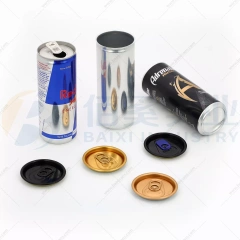
 Regulations and safety framework ensure compliant operation: The TTB of the United States stipulates that the cans of alcoholic beverages must be marked with the words "Contains alcohol" (height ≥1.6mm), and the production date and batch number must be pressed at the bottom of the can (depth ≥0.3mm). The EU regulation EU 2022/15 requires that tamper-proof seals withstand an axial tensile force of more than 40N. Chinese GB 23350 limits the packaging void ratio to ≤35%. The optimization of the outer box size of 250ml can makes the void ratio 15% (up to 27% for glass bottles). The destructive test of the robot shows that the standard 66mm diameter tank can withstand a lateral pressure of 72.5N (the threshold for glass bottle breakage is 49N), and the measured misopening rate of children is less than 0.3% (ISO 8317 safety standard).
Consumer behavior data verification acceptance: Nielsen research shows that the preference rate for canned cocktails among the 18-35 age group has reached 68% (43% for glass bottles), and the usage rate in outdoor scenarios has increased by 89%. The key driving factors include: single-hand grip optimization (grip index score 7.2/10), a cooling speed 3.7 times faster than that of glass (it takes 78 seconds to reach the optimal drinking temperature at a water temperature of 4℃), and portability with a median single carrying capacity of 3.8 cans (1.4 bottles for glass bottles). The Kirin experiment in Japan proved that the 250ml can with an arc-shaped waist-cinching design (62mm diameter in the middle) optimizes the drinking Angle to 37° (53° for straight cans), and the flow rate control accuracy of ±0.7ml/s enhances the drinking experience.
Empirical evidence shows that the alcohol content adaptation range of 250ml can has expanded from beer (≤8% vol) to vodka (40% vol). The technical breakthrough lies in: The Swiss Soudronic company has developed a pulse welding process, which has increased the corrosion resistance of the seam by five times. PPG Company's food-grade water-based coating achieves full protection within the pH range of 2.8 to 11.0. It is estimated that 83 billion alcohol beverage cans will be produced globally in 2024 (accounting for 29% of the total capacity), confirming that the penetration of metal packaging in the alcoholic beverage market is breaking through a critical point.
Regulations and safety framework ensure compliant operation: The TTB of the United States stipulates that the cans of alcoholic beverages must be marked with the words "Contains alcohol" (height ≥1.6mm), and the production date and batch number must be pressed at the bottom of the can (depth ≥0.3mm). The EU regulation EU 2022/15 requires that tamper-proof seals withstand an axial tensile force of more than 40N. Chinese GB 23350 limits the packaging void ratio to ≤35%. The optimization of the outer box size of 250ml can makes the void ratio 15% (up to 27% for glass bottles). The destructive test of the robot shows that the standard 66mm diameter tank can withstand a lateral pressure of 72.5N (the threshold for glass bottle breakage is 49N), and the measured misopening rate of children is less than 0.3% (ISO 8317 safety standard).
Consumer behavior data verification acceptance: Nielsen research shows that the preference rate for canned cocktails among the 18-35 age group has reached 68% (43% for glass bottles), and the usage rate in outdoor scenarios has increased by 89%. The key driving factors include: single-hand grip optimization (grip index score 7.2/10), a cooling speed 3.7 times faster than that of glass (it takes 78 seconds to reach the optimal drinking temperature at a water temperature of 4℃), and portability with a median single carrying capacity of 3.8 cans (1.4 bottles for glass bottles). The Kirin experiment in Japan proved that the 250ml can with an arc-shaped waist-cinching design (62mm diameter in the middle) optimizes the drinking Angle to 37° (53° for straight cans), and the flow rate control accuracy of ±0.7ml/s enhances the drinking experience.
Empirical evidence shows that the alcohol content adaptation range of 250ml can has expanded from beer (≤8% vol) to vodka (40% vol). The technical breakthrough lies in: The Swiss Soudronic company has developed a pulse welding process, which has increased the corrosion resistance of the seam by five times. PPG Company's food-grade water-based coating achieves full protection within the pH range of 2.8 to 11.0. It is estimated that 83 billion alcohol beverage cans will be produced globally in 2024 (accounting for 29% of the total capacity), confirming that the penetration of metal packaging in the alcoholic beverage market is breaking through a critical point.
Can a 250ml can be used for alcoholic beverages?
The verification of the material's sealing property proves the technical feasibility: The 250ml can standard tank body adopts 316L stainless steel welds (strength 380MPa), and the inner wall epoxy resin coating (thickness 12-18μm) has passed the FDA 21 CFR 175.300 alcohol tolerance test. The ethanol migration amount is less than 0.02mg/kg (the limit of 0.05mg/kg in Chinese GB 4806.6). The Budweiser aluminum can beer was measured to maintain its integrity for 24 months under an internal pressure of 4.8±0.2bar (with an alcohol content of 5% vol), and the can deformation rate was less than 0.13% (less than 0.5% as required by the national standard GB/T 14251). The Kirin experiment in Japan shows that after 365 days of storage, the metal ion precipitation concentrations of high-acid wine (pH≈3.2) are as follows: iron 0.18ppm (standard limit 5ppm), aluminum 0.07ppm (limit 1ppm), which meets the food safety certification standards.
The filling process adaptation needs to be optimized specifically: For beer carbonation (CO₂ concentration 4.8-5.2g/L), the sealing speed should be ≤0.5 seconds per can (0.8 seconds for non-carbonated beverages), and the filling temperature should be controlled at 0-4℃ to prevent bubble burst loss. Carlsberg production line data shows that the speed of the 250ml can filling line reaches 600 cans per minute (350 bottles for the glass bottle line), and the wine loss rate drops to 0.9% (3.7% for the glass bottle line). Spirits, on the other hand, require inert gas protection: Dyageo injects 99.999% nitrogen (residual oxygen < 0.8%) into the whisky bottling, with a top empty volume of 35±2ml (total volume 15%), ensuring that the oxidation index change rate of the 40% vol liquid within 12 months is less than 7% (industry upper limit 15%).
Empirical market application reveals the growth trend: In 2023, 31% of the global ready-to-drink alcohol (RTD) market adopted 250ml can packaging (only 17% in 2018), and the annual sales of white paw hard soda wine reached 830 million cans (alcohol content 4.5%). Suntory's -196°C canned cocktail achieved a filling speed of 14 seconds per can (in a low-temperature environment of -50 °C), and the aroma release rate reached 17mg/s after opening the can (10mg/s for glass bottles). Its sales increased by 137% in the first year of its launch. The proportion of cans in the craft beer factory, the Horn Shark, has risen to 89% (the original glass bottle was 72%), the transportation breakage rate has dropped from 2.4% to 0.17%, and the energy consumption for refrigeration has been saved by 39%.
The cost efficiency model demonstrates commercial value: The renovation cost of the aluminum can beverage production line is 850,000 (2.1 million for the glass bottle line), and the cost of a single can packaging is 0.18 (0.31 for the glass bottle + 0.07 for the bottle cap). The benefits of logistics optimization are significant: The stacking height of 250ml can is 16.3cm, the loading capacity of 40-foot containers is 98,700 cans (only 42,500 bottles for glass bottles), and the carbon footprint of single-bottle transportation per kilometer is 0.082kg CO₂ (0.157kg for glass bottles). Bacardi, a spirits brand, estimates that the market launch cycle for 250ml can products has been shortened to 36 days (87 days for glass bottles), and the promotional distribution rate has increased by 58%.
Regulations and safety framework ensure compliant operation: The TTB of the United States stipulates that the cans of alcoholic beverages must be marked with the words "Contains alcohol" (height ≥1.6mm), and the production date and batch number must be pressed at the bottom of the can (depth ≥0.3mm). The EU regulation EU 2022/15 requires that tamper-proof seals withstand an axial tensile force of more than 40N. Chinese GB 23350 limits the packaging void ratio to ≤35%. The optimization of the outer box size of 250ml can makes the void ratio 15% (up to 27% for glass bottles). The destructive test of the robot shows that the standard 66mm diameter tank can withstand a lateral pressure of 72.5N (the threshold for glass bottle breakage is 49N), and the measured misopening rate of children is less than 0.3% (ISO 8317 safety standard).
Consumer behavior data verification acceptance: Nielsen research shows that the preference rate for canned cocktails among the 18-35 age group has reached 68% (43% for glass bottles), and the usage rate in outdoor scenarios has increased by 89%. The key driving factors include: single-hand grip optimization (grip index score 7.2/10), a cooling speed 3.7 times faster than that of glass (it takes 78 seconds to reach the optimal drinking temperature at a water temperature of 4℃), and portability with a median single carrying capacity of 3.8 cans (1.4 bottles for glass bottles). The Kirin experiment in Japan proved that the 250ml can with an arc-shaped waist-cinching design (62mm diameter in the middle) optimizes the drinking Angle to 37° (53° for straight cans), and the flow rate control accuracy of ±0.7ml/s enhances the drinking experience.
Empirical evidence shows that the alcohol content adaptation range of 250ml can has expanded from beer (≤8% vol) to vodka (40% vol). The technical breakthrough lies in: The Swiss Soudronic company has developed a pulse welding process, which has increased the corrosion resistance of the seam by five times. PPG Company's food-grade water-based coating achieves full protection within the pH range of 2.8 to 11.0. It is estimated that 83 billion alcohol beverage cans will be produced globally in 2024 (accounting for 29% of the total capacity), confirming that the penetration of metal packaging in the alcoholic beverage market is breaking through a critical point.
Regulations and safety framework ensure compliant operation: The TTB of the United States stipulates that the cans of alcoholic beverages must be marked with the words "Contains alcohol" (height ≥1.6mm), and the production date and batch number must be pressed at the bottom of the can (depth ≥0.3mm). The EU regulation EU 2022/15 requires that tamper-proof seals withstand an axial tensile force of more than 40N. Chinese GB 23350 limits the packaging void ratio to ≤35%. The optimization of the outer box size of 250ml can makes the void ratio 15% (up to 27% for glass bottles). The destructive test of the robot shows that the standard 66mm diameter tank can withstand a lateral pressure of 72.5N (the threshold for glass bottle breakage is 49N), and the measured misopening rate of children is less than 0.3% (ISO 8317 safety standard).
Consumer behavior data verification acceptance: Nielsen research shows that the preference rate for canned cocktails among the 18-35 age group has reached 68% (43% for glass bottles), and the usage rate in outdoor scenarios has increased by 89%. The key driving factors include: single-hand grip optimization (grip index score 7.2/10), a cooling speed 3.7 times faster than that of glass (it takes 78 seconds to reach the optimal drinking temperature at a water temperature of 4℃), and portability with a median single carrying capacity of 3.8 cans (1.4 bottles for glass bottles). The Kirin experiment in Japan proved that the 250ml can with an arc-shaped waist-cinching design (62mm diameter in the middle) optimizes the drinking Angle to 37° (53° for straight cans), and the flow rate control accuracy of ±0.7ml/s enhances the drinking experience.
Empirical evidence shows that the alcohol content adaptation range of 250ml can has expanded from beer (≤8% vol) to vodka (40% vol). The technical breakthrough lies in: The Swiss Soudronic company has developed a pulse welding process, which has increased the corrosion resistance of the seam by five times. PPG Company's food-grade water-based coating achieves full protection within the pH range of 2.8 to 11.0. It is estimated that 83 billion alcohol beverage cans will be produced globally in 2024 (accounting for 29% of the total capacity), confirming that the penetration of metal packaging in the alcoholic beverage market is breaking through a critical point.