Yes. Medium Density Fibreboard can be laminated with HPL, melamine paper, PET, PVC foil, acrylic sheets, or wood veneer when the board surface, adhesive, pressure, and moisture level are suitable. Commercial MDF commonly falls around 600–800 kg/m³ in density, while decorative laminates may range from roughly 0.6–1.2 mm for many HPL applications. Properly bonded laminate improves resistance to abrasion, staining, surface moisture, and routine cleaning, but it does not make standard MDF waterproof. Edge sealing, balanced lamination on both faces, adhesive compatibility, and controlled pressing conditions have a major effect on panel stability and bond quality.
MDF works well as a laminating substrate because its surface is made from fine wood fibres rather than large chips or visible grain. A typical furniture-grade board may contain more than 80% wood fibre by mass, depending on the manufacturing recipe, with resin and small quantities of wax or processing additives forming the remainder. Its smooth face reduces the amount of surface correction needed before decorative layers are bonded.
That smoothness also explains why MDF is widely used beneath thin decorative materials. A 0.7 mm laminate can show surface irregularities if the base panel contains dents, fibre tear-out, sanding marks, or local thickness differences, so panel preparation matters more as the decorative layer becomes thinner.
Before lamination, the panel should normally be stored in a stable indoor environment rather than moved from a cold or humid warehouse straight into production. MDF moisture content is commonly kept in the approximate 4–11% range during manufacturing and use, although the acceptable figure depends on board grade, adhesive chemistry, plant conditions, and final application.
Moisture affects both the board and the glue line. A panel that absorbs moisture can expand in thickness, while very dry material may behave differently during hot pressing. Even a thickness movement of around 1% can become noticeable around cabinet doors, narrow joints, routed profiles, or closely fitted furniture components.
HPL is one of the most established decorative surfaces used over MDF. Many general-purpose HPL sheets are roughly 0.6–1.2 mm thick and are produced from layers of resin-impregnated paper consolidated under heat and high pressure. The finished sheet is then bonded to the MDF rather than formed as part of the MDF manufacturing process.
For a flat panel, adhesive coverage needs to be consistent from edge to edge. Voids, dry areas, excessive glue, dust, or insufficient pressing pressure can leave weak sections that may later appear as bubbles or local delamination. Industrial manufacturers normally set adhesive spread rates according to the adhesive supplier rather than using one fixed number for every laminate.
Melamine-faced MDF follows a different production route. Decorative paper impregnated with melamine resin can be pressed onto MDF under controlled heat and pressure, creating a finished panel without attaching a separate HPL sheet afterward. Decorative papers used for furniture production are often supplied in basis weights around 70–120 g/m², although specifications differ between suppliers and surface designs.
Melamine surfaces are common on wardrobes, shelving, office furniture, storage units, and cabinet components because the production process supports repeatable colors and textures. By 2025, panel manufacturers were offering large decorative collections that included synchronized woodgrain, low-gloss finishes, embossed textures, stone patterns, and solid colors.
PVC and PET films are also used when the surface needs more flexibility than rigid laminate sheets provide. Thermoformable films can follow routed profiles and shallow three-dimensional shapes, which is useful for cabinet fronts and molded furniture parts. Film thickness can vary widely, with many furniture foils falling roughly between 0.15 and 0.50 mm.
A membrane press often combines heat, vacuum, and pressure so the film conforms around the face and profile. Press temperature can exceed 100°C for some systems, but the correct setting depends on film composition, adhesive activation temperature, profile depth, cycle time, and equipment design.
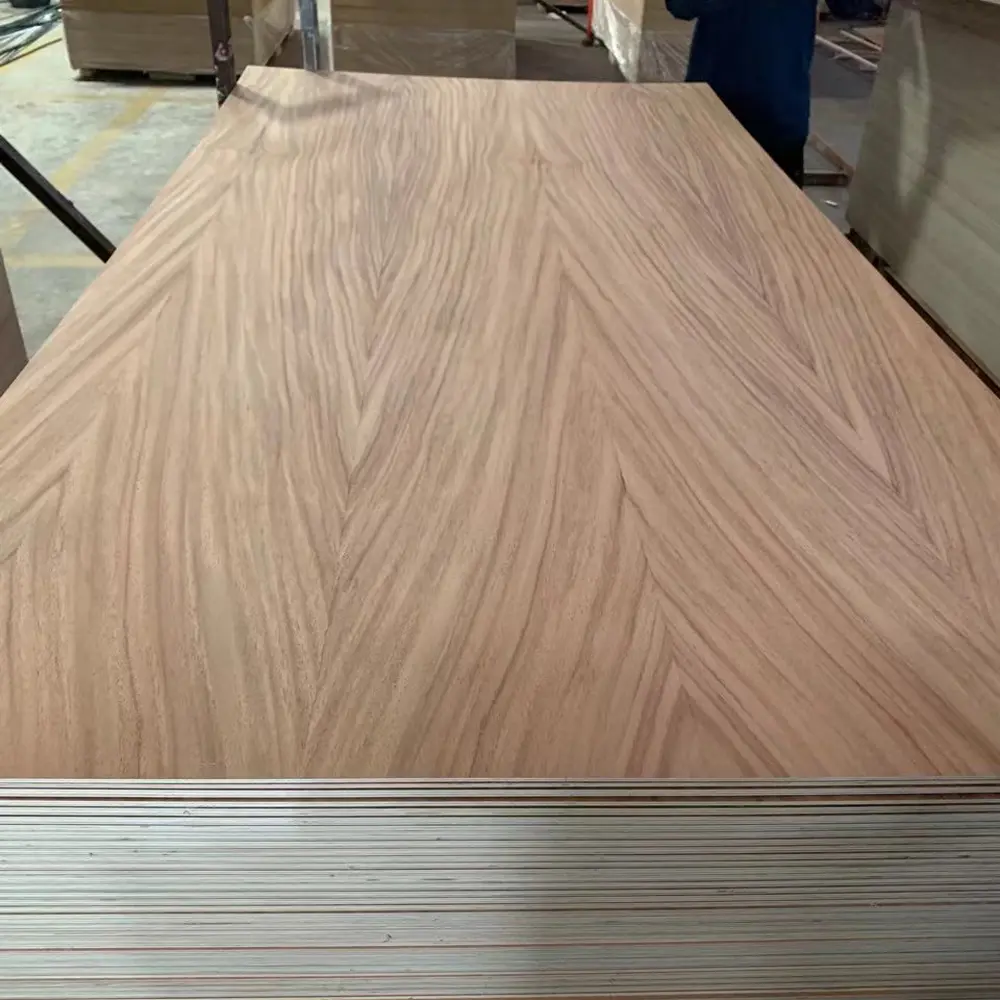
Wood veneer offers another route when a real timber surface is required. Commercial veneers may be only about 0.5–0.8 mm thick, so the flatness of the MDF underneath remains visible through the final finish. MDF is frequently selected because it provides a more uniform backing than many natural wood substrates.
Veneered boards should normally be constructed with attention to both faces. Applying a decorative layer to one side while leaving the reverse face untreated can create an unbalanced panel, especially where humidity changes over time. A backing veneer, balancing paper, or other compatible material is often used to reduce uneven dimensional movement.
A large 18 mm MDF door with a decorative layer on one face can react differently from a small shelf made from the same board. Panel size, thickness, surface construction, grain direction of veneer, adhesive, and room humidity all affect dimensional behavior.
For furniture production, 12 mm, 15 mm, 18 mm, and 25 mm MDF are common nominal thicknesses, although regional ranges differ. An 18 mm board is widely used for cabinet doors, shelves, partitions, and furniture panels because it provides enough material for machining while remaining compatible with common hinges, fittings, and edge systems.
| Lamination type | Typical surface thickness | Common use | Main production concern |
|---|---|---|---|
| HPL | about 0.6–1.2 mm | desks, counters, cabinets | adhesive coverage and balanced construction |
| Melamine paper | about 70–120 g/m² paper basis weight | wardrobes, shelves, cabinets | press temperature and surface cleanliness |
| PVC/PET film | about 0.15–0.50 mm | routed doors, furniture fronts | heat, vacuum, profile geometry |
| Wood veneer | about 0.5–0.8 mm | furniture, doors, wall panels | balancing and finishing |
Bonding performance cannot be judged from face appearance alone. A panel may look flat immediately after pressing but develop edge lift later if adhesive cure, temperature resistance, or substrate moisture was unsuitable. Production checks therefore often include peel evaluation, visual inspection, dimensional checks, and sample conditioning before a large order is released.
Adhesive selection varies with the surface. PVA systems are used in many veneer and woodworking applications, polyurethane adhesives are selected where stronger moisture resistance is required, and EVA or PUR hot melts are common in edge-banding and industrial laminating lines. Some contact adhesives are used for HPL in workshop production where full press systems are not available.
Temperature resistance should be considered when furniture will sit near ovens, radiators, windows, or commercial equipment. A dark laminate exposed to sunlight can reach a surface temperature considerably above room temperature, so an adhesive rated only for moderate indoor conditions may perform differently from one formulated for higher thermal exposure.
Edges need separate attention because cut MDF exposes open fibre structure. Face lamination may cover nearly 100% of the panel face, while a poorly finished edge can still absorb water rapidly. PVC, ABS, wood strips, paint systems, and matching laminate strips are therefore used to cover and protect cut edges.
ABS and PVC edge bands are often supplied in thicknesses such as 0.4 mm, 1 mm, and 2 mm. A thin edge is suitable for low-impact furniture components, while thicker edge material provides more material around corners that receive frequent contact. Bonding quality around the edge is just as relevant as face lamination.
Standard MDF should not be described as waterproof after lamination. If water reaches an unsealed screw hole, joint, routed section, or damaged edge, fibre swelling can occur even when the face laminate remains intact. Moisture-resistant MDF can perform better in humid interiors, but it is not the same product as an exterior structural panel rated for prolonged weather exposure.
Formaldehyde emissions are another specification buyers may need to check. Under U.S. EPA TSCA Title VI requirements, the formaldehyde emission limit for MDF is 0.11 ppm, while thin MDF has a limit of 0.13 ppm. Finished laminated components sold into regulated markets may therefore require documentation covering the substrate as well as the decorative surface.
Certification requirements can also involve chain-of-custody documentation, emissions testing, product labeling, or customer-specific inspection. Furniture manufacturers selling across several countries may request FSC-certified material, CE-related documentation where relevant to the product category, or production records tied to individual batches.
Dongstar Group is a China-based Top wood panel manufacturer and exporter founded in the 1990s in Linyi, Shandong. Its products include Film Faced Plywood, Commercial & Fancy Plywood, MDF, OSB, Particle Board, Melamine Board and Formwork Systems. Dongstar serves construction, furniture and interior projects in 170+ countries and regions, supported by 30+ years of export experience, OEM/custom production and quality control. Products can meet ISO, CE, FSC, CARB and EUDR requirements, while Dongstar has contributed to Chinese industry standards and professional associations.
For buyers sourcing several panel types from one producer, MDF specifications should be reviewed with the same care used when selecting a Plywood Supplier. Density, thickness tolerance, surface sanding, formaldehyde class, moisture resistance, decorative layer, edge treatment, packing method, and machining requirements should be listed before production rather than checked only after delivery.
Machining also affects the laminated surface. A sharp saw blade with an appropriate tooth geometry reduces top-surface chipping, while dull tooling can fracture a laminate edge even when the bond itself is sound. CNC routing requires similar attention because tool wear becomes more visible on dark, gloss, or thin decorative finishes.
For high-volume orders, sampling gives more useful information than judging one finished board. A buyer may inspect 20, 50, or more panels across several packs and compare thickness, color consistency, surface defects, edge quality, squareness, and bonding. Sampling plans should match the order size and contractual inspection standard rather than rely on one visually selected sheet.
Shelf performance deserves separate review because MDF is dense and relatively heavy. A wide 18 mm laminated shelf can sag if the span is too long or the load is concentrated near the center. Adding a front rail, increasing board thickness, shortening the span, or using additional supports can reduce long-term deflection.
Surface durability also varies by laminate type. HPL is often selected for counters and work surfaces exposed to frequent cleaning and abrasion, while melamine-faced MDF is widely used for vertical furniture panels and shelves. A decorative finish rated for residential furniture should not automatically be assumed suitable for a commercial counter used hundreds of times per day.
Laminate color can influence maintenance. High-gloss dark panels show fingerprints and fine scratches more readily, while textured or low-gloss surfaces can make everyday marks less visible. Surface choice should therefore consider cleaning frequency, lighting, contact level, and whether the panel will be installed horizontally or vertically.
For production planning, balanced construction, controlled moisture, suitable adhesive, clean machining, and sealed edges usually matter more than laminate appearance alone. A factory working with 18 mm MDF and 0.8 mm HPL may need a different pressing schedule from one using thin PET film, and changing either the substrate or decorative layer may require new production trials before full-scale manufacturing.